What Paramedics Really Expect from Dental Practices in Wales During an Emergency

Back of a paramedic carrying a bag

Medical emergencies in dental practices are not rare theoretical events. They’re real & happen in practices like yours.

Studies show that dental professionals in local practices encounter medical emergencies on average every 1 to 2 years. That means most dental practices across the UK will have to deal with at least one emergency every few years, even if it feels like it doesn’t happen often. 

On top of that, the General Dental Council (GDC) expects every registrant to be competent & confident in handling these situations. The guidance doesn’t merely encourage training; it requires evidence of capability in managing medical emergencies. 

But many practices still feel underprepared when the moment comes.

Why this matters more than ever for dental practices in Wales

Ambulance wait times across the NHS have increased significantly in recent years. In parts of South Wales, paramedics can take an hour or more to reach urgent calls. Your team will be caring for a seriously unwell patient for longer than you think, even after you’ve called emergency services.

This changes the game. 

It means your Emergency Action Plan, your team training & your approach to drugs & equipment don’t just protect your patients - they also protect your team, your practice & your reputation.

Gold-standard emergency care means more than just ticking items off a checklist. It really means maintaining confidence during high-pressure situations.

Paramedics are not looking for perfection - they’re looking for preparation.

A number of dental staff performing CPR on child & baby manikins

When paramedics arrive at a dental practice in an emergency, they’re not auditing your dentistry skills. They’re assessing how confidently & safely the situation has been managed so far.

Research published in the Journal of Paramedic Practice outlines what experienced paramedics expect to see when they arrive at a medical emergency in a dental setting. They focus on three key areas:

1. Emergency Action Plan (EAP)

Not just a policy that’s been placed on a shelf, but a plan everyone in your practice knows & can act on.

2. Staff Training

Not just annual CPR certificates, but training that builds clear roles & muscle memory.

3. Drugs & Equipment

Not just owning an AED & emergency drug kit, but knowing who can use what, when & how.

These aren’t luxury items. They’re core to keeping patients safe before paramedics arrive.

The GDC & Resuscitation Council UK both support this approach. They highlight that all clinical areas where patients are seen should have immediate access to an AED & a suitable emergency drugs kit that your team is prepared to use. 

It’s not easy for you to keep up with up to date guidance. GDC, Resuscitation Council, and the BNF give you crucial information, but it's often scattered & difficult to consolidate. This leads to stress & wasted time spent searching for documents rather than focusing on patient care.

Confidence protects patients.

A 2023 UK study (Sin et al.) highlights a common theme among dental professionals: reduced confidence in diagnosing & managing medical emergencies such as adrenal crises, anaphylaxis and seizures.

That’s understandable. These situations are rare, and real-life practice opportunities are even rarer. When emergencies do occur, it’s the confidence to act quickly & effectively that makes the difference between chaos & calm.

Just owning equipment isn’t enough. Effective CPR & correct use of an AED can dramatically increase the chances of survival in cardiac arrest. 

The UK sees around 60,000 out-of-hospital cardiac arrests every year, so being confident in these skills matters, even if they seem unlikely in your day-to-day practice.

So what should dental practices in Wales actually do next?

The truth is this:

The information is available, but it’s spread across various bodies & guidelines, which can make it unclear.

That is why your first step should be to understand where your practice really is today.

Start with your Dental Practice Safety Self-Assessment

This free self-assessment takes about 10 minutes and asks practical questions about:

After completing it, you get a downloadable report showing where your practice is strong and where you may need support. It isn’t judgment, it’s clarity.

From there, you can build a clear action plan, strengthen your team’s confidence, and ensure everyone on your team knows what to do in the moments that matter most.

What happens next?

Over the next few weeks, we will break down the three key areas that paramedics judge first:

  1. Emergency Action Planning
    What it is and how to make yours bulletproof.
  2. Team Training for Medical Emergencies
    What good training really looks like.
  3. Emergency Drugs and Equipment
    Who can administer what and why clarity matters.

You don’t have to do it alone.
You just need information that makes sense.

Start your Dental Practice Safety Self-Assessment today

Is Online Dental ILS Training Enough For My Team?

Your Dental CPD courses are essential but time consuming. So Online Training is a great solution...right?

Two hands holding an item of clothing showing the label one size fits none

Since COVID, everything that wasn't online certainly is now - your CPD training is no exception. But does that mean you don't need practical training anymore?

Well...not quite.

Let's look at online training as a whole...

Online Isn't The Ultimate Solution.

Online training lets you complete endless hours of quality CPD in the palm of your hand. It's accessible, cheap & easier to fit into your busy schedule.

But should it replace face-to-face training?

Learning about a topic is one thing, practising your skills in that topic in your clinic is something else.

Hand placing a coin in a pink piggy bank.

Online training is cheaper. But there's a reason for that.

It requires little man-power & offers skills to test" your knowledge in. That's great for simple training courses or to supporting more in-depth training.

But you can't deliver adrenaline or practice complex airway management through your computer screen. And you definitely can't physically practice CPR.

Dental specific ILS requires advanced airway management techniques that must be practised in person (ideally in your treatment room) in realistic scenarios.

So "No" to Online Training?

Also not quite true!

Practical training gives your team the opportunity to prepare in your practice, using the more complex airway techniques required for dental ILS training.

There are specific processes within Dental ILS that must be practised in person to achieve competence under pressure in a real scenario.

So what's the down side?

Time.

Practical dental ILS courses often range in time from 7 hours - to 2 days depending on the required content. You've got a busy practice to run & limited amounts of free time for your team to train.

Practical training is also more expensive than online training as it's more complex & requires a qualified instructor. There's no real substitute for practical training, but it can't be your only form of CPD.

So What Should You Do?

Both.

Blended learning is now the norm because you get the best of both worlds.

Any training that requires physical practice (administering injections/drugs, CPR, inserting airways etc) must be done practically to achieve competence throughout your team.

White head silhouette created with puzzle pieces

When it comes to dental ILS training, a short online course alone will not prepare you for a real-life emergency. You can gain the theory & knowledge, but without practice, you lack the confidence to perform.

Theoretical training completed online should compliment & support practical training between your annual sessions. You can then find more specific online training that focuses on an element of the practical course you may have learnt.

We always recommend completing the training you need to make your whole team confident rather than just doing the minimum required. Y

our patients depend on you to keep them safe - don't let them down.

We hope that helps you balance online & in-person training. But if you need any further help, please contact us

P.S. If you need Dental ILS training for your team, you can book here

Do I Need a Dental Specific ILS course?

Here's what you need to know about Dental ILS training in your practice.

There's lots of options when it comes to ILS training in your dental practice - but does your ILS need to be dental specific?

Tooth with question marking indicating question about dentistry

Why ILS?

ILS training is required for any dental practice delivering sedation. Your sedation team must all be trained in the advanced airway management techniques required in an emergency.

If you offer sedation in your practice, understanding the potential medical emergencies associated are vital.

But does your training have to be dental specific? It's a grey area so let's try & shed some light on it.

What's the Guidance?

The Intercollegiate Advisory Committee for Sedation in Dentistry (it just rolls off the tongue!) or IACSD provide the Standards for Conscious Sedation in the provision of Dental Care (another snappy title).

The standards should give you all you need to know about sedation & the training you need. But does it?

IACSD state that the entire sedation team must be trained in ILS as per Resuscitation Council UK guidance. They also state that you don't have to attend a Resus Council course & that dental specific equivalent ILS courses are also acceptable.

So you're still left asking...'WHAT SHOULD I DO?'.

We Still Haven't Answered the Question...

That's because, as usual, there isn't a single answer for everyone.

Ultimately, you don't have to do a dental specific ILS course. But consider some of the following questions before deciding:

It's all about feeling confident & prepared. You want to know that if something goes wrong, your team will work together to calmly & effectively manage the emergency right?

Training in your practice, with your team & your equipment is usually the best route to that outcome.

So what do we recommend?

Our Recommendation

We always recommend that any training you take should be completed to best prepare your team not to just tick the boxes.

Anything you can do to make your team feel more confident in an emergency at your practice will always be worth it should the worst happen.

Dental specific training will ensure you get training that's suited to you & your team. This will engage your team & give them a safe environment for asking all the question thy need to.

Ideally, ILS training that follows on from your CPR & Medical Emergencies would also be preferrable. One provider can maintain consistency through your training & get to know your team & how you operate.

The decision lies with you & what suits your team best. But if you're unsure or need any further guidance, get in touch - that's what we're here for!

P.S. If you're ready to book a Dental ILS course for your practice you can BOOK HERE

Why Do AED Pads Expire? The Shocking Truth.

Close up of Defibrillator "shock" button.

Actually, it's not that shocking...but it is the truth! Here's why your AED pads expire.

Not many things are more frustrating than your medical equipment & emergency drugs expiring.

You spend A LOT of money to keep your patients safe, but having to throw away equipment without it ever being opened is galling.

But why do those items expire?

It stands to reason that emergency drugs have expiries as they become less effective & sometimes dangerous over time.

But what about equipment? Surely there's no reason for AED pads to go out of date is there...?

Well actually, there's a perfectly good reason why they expire - let's see why...

The Lifespan of a Defib Pad

The pads that come with your AED are sealed in a packet & likely already attached to your defibrillator ready for use. But they can only be used once.

Once opened & used, they need to be disposed of due to (among other things) the adhesive gel that sticks the pads to a patient's chest losing it's stickiness.

After approximately 2 years, even without use, the gel begins to naturally break down, lose it's adhesion & potentially begin to peel away from the pad itself.

For a defibrillator to effectively analyse your patient, the pads must make a strong connection directly with their skin. If the adhesion of the pads has broken down, the AED won't be able to analyse the patient's heart rhythm effectively.

Using out of date pads reduces the chance of your defibrillator working effectively when you need it most. So assessing your AED regularly as part of your overall drug & equipment checks is absolutely essential.

All Is Not Lost

But before you throw away those expired paid - WAIT!

Rather than throw them away, you can help us to reduce waste!

Expired AED pads could be used for CPR & AED training. We're always happy to take out of date pads off your hands as we can often re-use them as part of your practice training scenarios with trainer AEDs.

If you have any out of date pads contact us & we can arrange collection or take them at your next CPR & Medical Emergencies training session.

P.S. - Need to book in your Dental CPR & Medical Emergency training? You can now complete your booking via our customer form HERE

3 Ways to Prepare For Medical Emergencies During Dental Sedation.

Is your dental team ready for sedation?

Insertion of an i-gel airway into a manikin

If you're utilising sedation in your practice, your team need to be fully prepared to meet your duty of care if your patient becomes unwell.

Serious about managing sedation?

Here are 3 areas to consider:

1. Increased Risk of Medical Emergencies

Your team needs to be able to manage the additional risks associated with sedation including: -

Your team must be confident & ready for such complications & fully understand their role in an emergency. To do this, they'll need regular, dental specific ILS (Immediate Life Support) training.

2. Additional ILS Training in Practice

As well as training in the delivery of sedation, your entire sedation team must have ILS training as per the Intercollegiate Advisory Committee on Sedation in Dentistry (IACSD) Standards for Conscious Sedation in the provision of Dental Care 2015.

As a professional dental team that cares for your patients, your training has to suit your environment. You need dental specific, scenario-based ILS training that prepares you for an emergency above the level of basic CPR & AED training.

Dental staff standing in a row smiling

Training should leave your team feeling confident & prepared for managing an emergency. There's specific equipment & techniques that must be practiced to achieve this including the use of oropharyngeal, nasopharyngeal & I-gel airways.

Understanding the role & responsibility of each member of the team is also key & should form part of your training. You should have dental specific, scenario-based ILS training that prepares your team for an emergency during conscious sedation in your setting.

Although Dental ILS training is annual, your team should complete training as regularly as is required to remain competent & confident to keep your patients safe.

3. Emergency Action Plan

Have you identified the risks & taken action to minimise them?

Review your practice response to a medical emergency & produce an emergency action plan that includes:

These Are Just the Basics

These are just some of the things you need to think about when delivering sedation. For more information, the IACSD provide guidance in all aspects of sedation in dentistry here.

P.S - If you need further information on ILS training for your dentistry team, we're here to help. Click Here to book or find out more.

Anaphylaxis v Swelling in Dentistry-Can You Tell the Difference?

3 ways to tell the difference between swelling from extraction vs anaphylaxis.

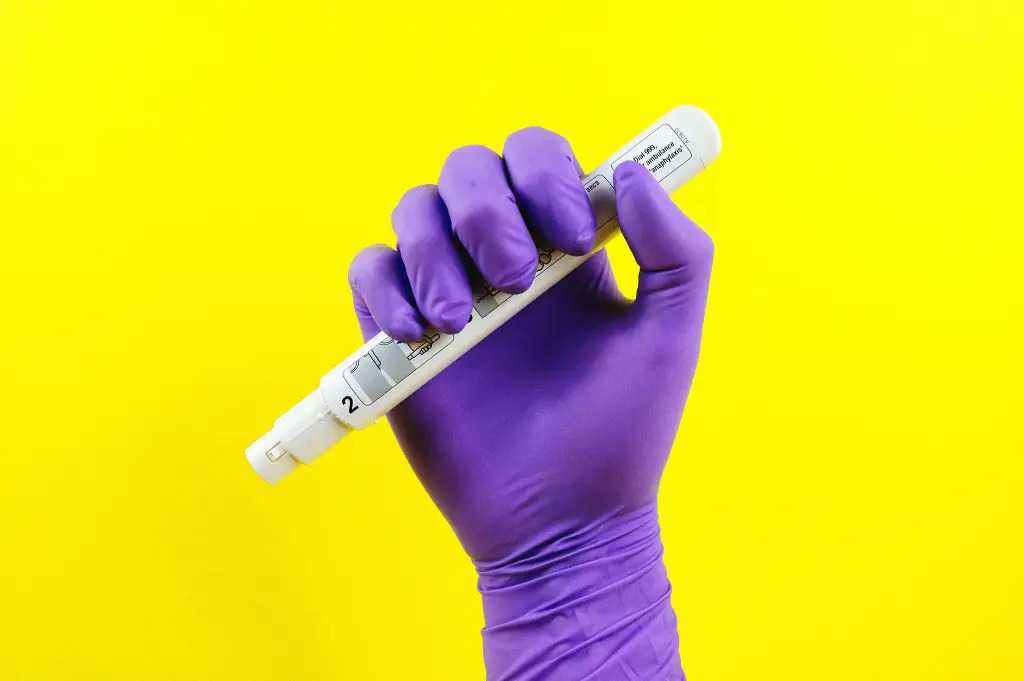
Purple-gloved hand holing an adrenaline auto-injector preparing to administeradrenaline

Picture the scene: Your patient's had a successful extraction but complains about some discomfort & swelling after completion. It's to be expected after the fairly brutal process & dose of anaesthetic.

But suddenly they start to sound raspy & before you know it, they're struggling to breathe.

Your patient has suffered an anaphylactic reaction & their life's now in your hands.

How were you to know? Could you have spotted the problem sooner?

How to Tell the Difference

You won't always be able to detect early subtle signs & symptoms of anaphylaxis immediately, but let's look at the key things to consider.

1. Localised v Systemic Swelling

Following an extraction or invasive dental work, patients might experience some swelling in & around the area it was carried out.

The key difference is that anaphylaxis a systemic reaction affecting multiple systems in the body. This often means swelling in other areas away from the site of treatment.

Look for puffiness & swelling around the eyes & lips externally - areas that shouldn't be affected by the treatment you've given.

2. Changes in the Skin

Following invasive treatment, your patient may experience some minor bruising or redness around the area of treatment.

The skin is another organ often affected by an anaphylactic reaction. A rash can be a common sign of anaphylaxis. This is something you can look out for particularly following local anaesthetic & may even appear as you assess the patient.

The rash is often raised hives (urticaria), red & very itchy/uncomfortable for the patient. It can be present all over the body but often on the patients hands, arms & face (particularly around the eyes).

3. Internal Discomfort

This will initially be the most difficult symptom to detect particularly following local anaesthetic. While numbness & some discomfort is expected, the airway & ability to breath shouldn't be affected.

Swelling of the tongue & airway is a serious sign of anaphylaxis especially if it affects the patient's ability to breathe. This can produce a rasping noise (stridor) from the upper airway. These aren't symptoms normally associated with dental treatment. The tongue may even protrude from the patient's mouth.

Difficulty breathing (or a wheeze) & a drop in blood pressure causing the patient to collapse are indicators of anaphylactic shock.

Key Take Away

It's important that all staff are familiar with the signs & symptoms of anaphylaxis & that drugs & equipment are quickly available to manage a reaction.

Your practice should have an emergency action plan identifying the actions to take during during a medical emergency & clarifying all staff roles & responsibilities.

We hope that helps but if you have any specific questions about anaphylaxis, please feel free to contact us!

You can also refer to the Resuscitation Council UK's FAQ's in relation to anaphylaxis.

P.S. We also provide additional Drug Administration & IM injection courses. If you'd like to know more, Contact Us

Free Dental CPD Training!

Used your CPR or Medical Emergency skills recently? You or your practice could get free CPD training - here's how...

If you or your team have used any skills from your CPR or Medical Emergency training, we want to hear about it!

Female dentist wearing cap & mask dressed as superhero

Nobody in your practice wants a medical emergency to happen. But if it does, we want to know that your training helped you prepare & manage any emergency to the best of your ability.

We want to know what happened & how your team dealt with it. Then we'll enter you into our draw to win one of the following courses of your choice:

All you have to do is email us at info@lubasmedical.com or use our contact us form telling us how you & your team managed the emergency.

We also want to share your story in our monthly newsletter 'To the Point' (we're happy to keep you or the practice anonymous).

The draw will be completed in December & you'll be notified if you win straight after.

Good Luck!

The Lubas Team