Wound Management - Questions You Need to Ask

Of all the skills taught on our Wound Management course, wound assessment is among the most important. You can't just scramble onto the pitch and start suturing; you first need to inspect the injury in question, making an informed decision about how best to proceed.

Here are some of the questions you need to ask before commencing wound treatment:

Entonox - it's not a laughing matter!

Using Medical Gases in Sports Trauma Management

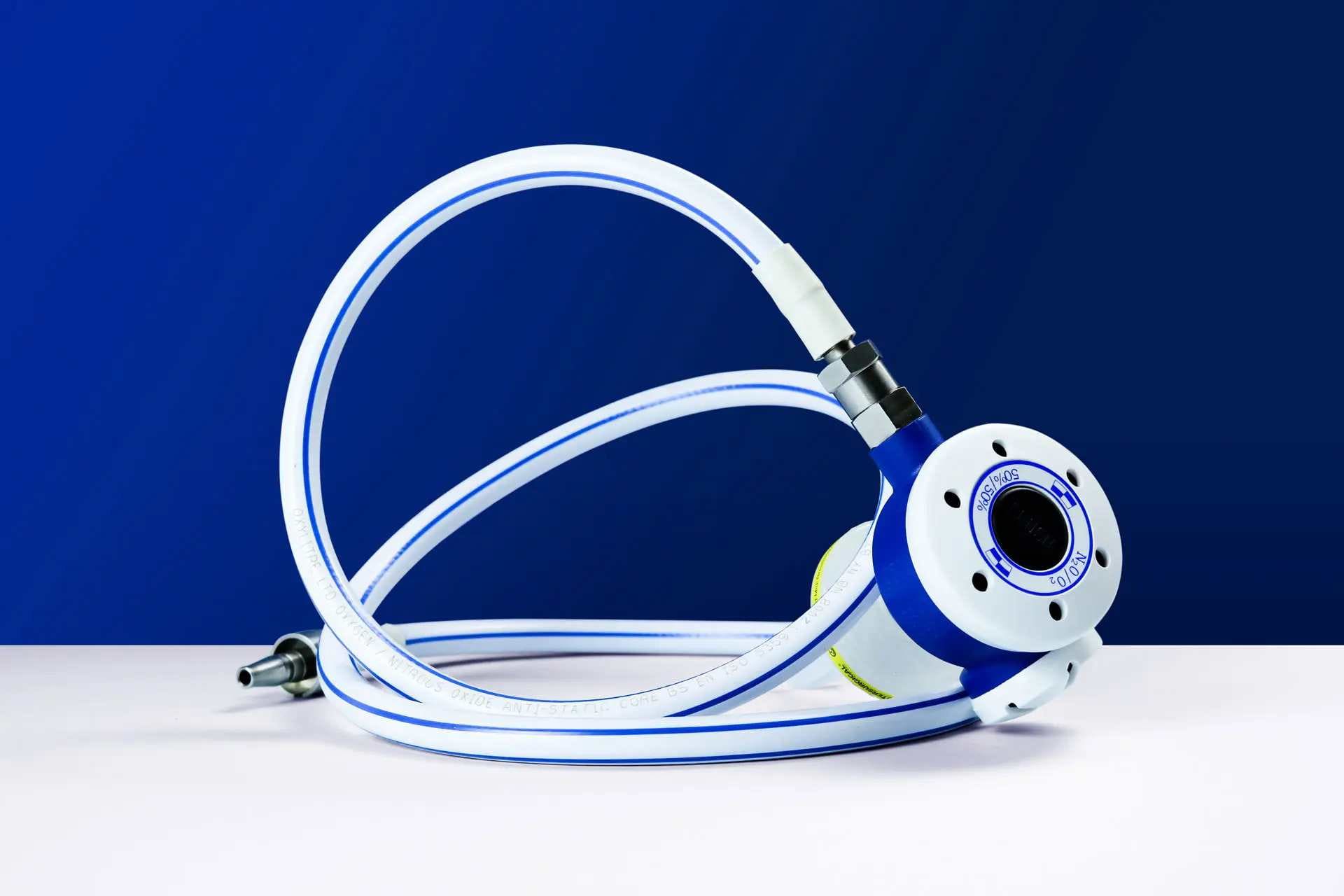
Entonox mouthpiece

What exactly is Entonox?

Entonox is a pain killing/relieving gas made up of 50% Nitrous Oxide & 50% Oxygen. It's a very effective analgesic agent with rapid onset & offset characteristics.

Nitrous oxide was discovered in the mid-1700s. Its was first used in America to reduce the pain of tooth extraction & was introduced to Europe in 1867.

Studies show 20-30% nitrous oxide has a comparable analgesic effect to 15mg of sub cut morphine. 50% nitrous oxide (Entonox) was equivalent to 100mgs of pethidine. (Chapman et al, The analgesic effects of low concentrations of Nitrous Oxide compared in humans with morphine sulphate).

When we use Entonox

You should consider using entonox for pain relief after traumatic injuries to your players. You can use it prior to splinting a suspected fracture or painful soft tissue injury in adults & children.

Entonox is a self-administered, inhaled analgesic agent indicated for moderate to severe pain.

Why we use Entonox in Sport

Traumatic sports injuries occur in all sport from grassroot to professional levels.

Your club may be well equipped to deal with these injuries, but not all clubs have access to the appropriate equipment or training. This can leave your players at risk and in pain while waiting for the emergency services to arrive.

This news story from 2015 that emphasizes the point: http://www.bbc.co.uk/news/uk-wales-south-west-wales-30693304

30-year-old Luigi Segadelli broke his tibia and fibula while playing for Morriston RFC in Swansea. The game was cancelled as Luigi's foot began to turn blue due to the length of time he waited for emergency help.

Who can use Entonox?

Entonox must be administered correctly once you are appropriately trained working within the scope of your professional practice. There are practical elements to the administration of Entonox as well as side effects to consider.

Lubas Medical team removing injured Cardiff City player with leg fracture

Good sports first aid training and/or medical training, combined with the correct use of Entonox, can offer your players immediate pain relief. This enables you to appropriately splint & manage your injured player.

Want more info? For further details view our medical gases course page. We also discuss Medical gas administration on our Sports Trauma Management Course. 

Stitch up, look smart!

5 tips to prepare for Suturing & Wound Management

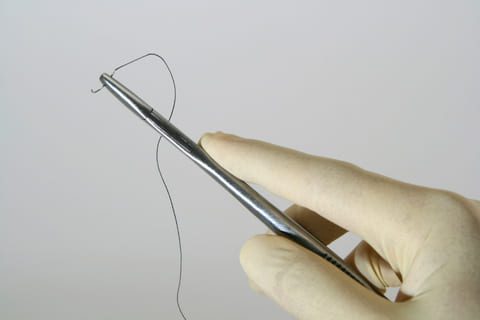
Hand holding suture

A clash of heads or studs to the leg, suturing & wound management is one of the most common skills required for pitch side medical staff.

But the knowledge and skills alone aren’t enough.

Taking responsibility for your first wound is daunting, but you should be able to manage with confidence even under pressure.

Here are 5 quick tips for getting yourself prepared for suturing & wound management:

1. Specialist Training

Suturing is a skill you should learn from a medical professional with experience in the field. Any training you attend needs to cover the content required for your role. Do your research and, if necessary, speak with the provider to confirm the content is right for you!

Woman suturing wound.

2. Regular Practice

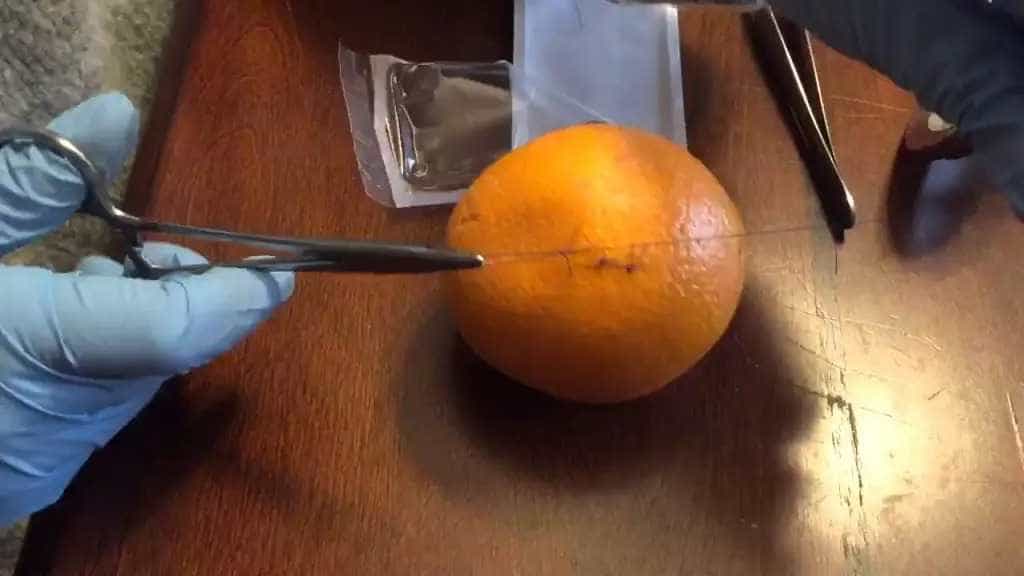
You can’t put your skills to the test without regular practice. Although nothing prepares you better than experience, practice definitely makes perfect. Oranges & leather sponges are good substitutes for the real thing. Take the time to practice suturing, stapling and gluing different types of wounds.

Hands practising suturing on an orange

3. Suitable Kit

Make sure your kit is up to scratch. Get to know your equipment. Use kit that's similar or the same to the kit you train & practice with & are comfortable using.

It's time consuming & often expensive trying to locate individual suturing items for your own kit. We offer ready made bags that include all the equipment used on our course

4. Communication within your team

Communication is key throughout your pitchside medical team. Only members of the team with suturing qualifications, insurance and experience should manage serious wounds.

Never work outside your scope of practice and always work within your team, organization or employer’s guidelines.

It should be made clear to everyone within the team who is responsible for all assessing & suturing more serious wounds.

5. Consider the worst-case scenario

Always prepare for the worst-case scenario. There is always a possibility you could be dealing with a major wound/bleed. Know your limits and ensure you have an action plan in place for an emergency.

Following a training course you should be able to access advice and ongoing support when required. We offer this to all attendees of Lubas Medical courses.

For further information on Wound Management & Suture courses contact us.

Mind Your Head! We all need educating about head injuries

A head injury article for those involved in sport at grassroots level. 

Head injuries (particularly concussion) continue to be a major talking point at all levels of medical care in sport.

But how can we expect head injuries to be taken seriously or fully understood in professional sport, when most people at grassroots don't know the basic considerations?

It seems coaches, parents, players, managers (and some first aiders!) think head injuries are an area that only medical professionals need to worry about.

But a small amount of basic knowledge and understanding can help us all deal with head injuries.

From a first aid perspective, think about which of the following you would be able to assess and manage:

1. Concussion or a serious head injury

Would you be able to assess for signs of concussion?

Could you assess for signs of other types of head injury like a fractured skull or compression?

Would you know when to remove the player and when to let them carry on?

2. Unconscious casualty

If the casualty collapsed and became unconscious, how would you manage them?

Should you move the casualty?

When would you consider calling 999?

3. Open wound

If the player has an open wound, could you control the bleeding?

Should the player carry on?

Are you prepared for the potential risk of infection to both you and the player?

If player welfare really is the number one priority, coaches, players, officials, parents and players should all be able to answer the above questions as a minimum.

Just this week, Newport County manager Mike Flynn questioned the reasoning behind an enforced extended period of rest for Antoine Semenyo following a concussion against Oxford United. As Semenyo is under 19, the F.A's rules dictate an additional 6 days' recovery. Rather than publicly suggest this is unnecessary and potentially undermine the ruling, it would be more helpful for Flynn to find out why this is the case.

Increased awareness and understanding of head injuries at grassroots football would only serve to help medical professionals and player welfare at all levels.

Click here for further information about Lubas Medical First Aid for Sport & Exercise (FASE) courses.

What is an Automated External Defibrillator?

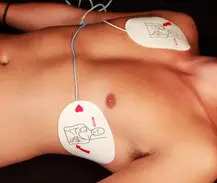
A defibrillator is the machine we use to deliver electrical energy to the heart during an abnormal or very rapid erratic rhythm (Ventricular Fibrillation). Electrodes placed on the casualty’s chest deliver a measured electrical shock to the heart to restore natural rhythm.

When was the defibrillator invented?

The first use of an external defibrillator on a human was in 1947 by Claude Beck.

The portable version of the defibrillator was invented in the mid-1960s by Frank Pantridge in Belfast, Northern Ireland. He was a pioneer in emergency medical treatment.

How does a defibrillator work?

Automatic external defibrillators (AEDs) are small computerized devices that analyze heart rhythms and provide the shock needed for defibrillation.

Through electrodes placed on a patient’s chest, a processor inside the AED analyzes the victim’s heart.

The machine will not shock unless it is necessary. AEDs are designed to shock only when VF is detected.

After the AED analyzes the heart rhythm and determines a shock is required, an electric current is delivered to the heart through the victim’s chest wall through the adhesive electrode pads.

The shock delivered by a cardiac defibrillator interrupts the chaotic rhythm and allows it to return to normal.

Male chest with defibrillator pads attached

It makes a big difference

With CPR alone, the chance of survival after sudden cardiac arrest is less than 5%. When CPR is combined with the use of a cardiac defibrillator within the first few minutes, the chance of survival can increase dramatically to more than 75%.

Having an AED on hand gives victims of sudden cardiac arrest the best chance of survival until Paramedics arrive and take over care. 

For further information or to learn CPR & how to use a defibrillator, click here.

5 fears you shouldn't have about using a Defibrillator

For every minute that passes following a cardiac arrest, the chances of survival without defibrillation decrease by 10%. Yet a recent 2017 UK YouGov poll showed that a worryingly high 7 out of 10 people would not be confident using a public defibrillator.

Here are 5 of the main fears you really shouldn't have about using a public defibrillator...

1. Fear of the Unknown...

For those that have never been trained to use a defibrillator, or even seen one up close, the thought of grabbing the nearest one and "giving it a go" wouldn't cross their mind. "What if I'm not allowed to use it?", "What if I hurt someone?", "What if I hurt myself?", "I don't know how it works!".

But fear not! Defibrillators are remarkably "intelligent" pieces of equipment that have been designed for ANYONE (that means you!) to use in an emergency situation. An Automated External Defibrillator (AED) will actually "talk" to you and guide you through how to use it. It really couldn't be easier!

2. Fear of causing the casualty harm...

The same 2017 YouGov poll showed that huge 62% of people believed a defibrillator would potentially cause a casualty harm.

As previously mentioned, the defibrillator will "decide" when a shock is required. If the casualty's heart is still beating, the defibrillator won't allow a shock even if you push the "shock" button.

3. Fear of being trained...

It may sound odd but a lot of people worry that if they learn how to use a defibrillator, they will be taking on more responsibility that they don't want to shoulder. Others aren't aware that anybody can be trained to use a defibrillator as part of a First Aid course, they assume it can only be used by medical professionals. In actual fact, training isn't a requirement to use a defibrillator (although it is highly preferred). They are available for all bystanders to use when required regardless of training.

If defibrillation is provided within the 1st minute of a cardiac arrest, survival rates increase to 90%.

These views could easily be changed with raised awareness, and education at an early age i.e school. The U.K is a long away behind other European countries (particularly in Scandinavia). In Sweden alone there are approximately 5,151 public defibrillators and 3 million people are trained to administer CPR through mass courses in schools and workplaces (figures from the Defib Shop). The general attitude towards CPR and defibrillation in the UK needs to change dramatically.

4. Fear of being "sued"...

This seems to be a big fear within First Aid in general. With the current blame culture we live in, a large number of people are put off by the thought of being sued by a casualty. This is a big misconception that really holds back the volume of people in the UK that get trained in basic First Aid and using a defibrillator.

Nobody in the UK has ever been sued for attempting CPR. In 2015, the government introduced the ‘Social Action, Responsibility and Heroism (SARAH)’ act to protect those performing “acts of heroism”.

Again, we have to educate from an earlier age to encourage people to provide Basic Life Support and make the above information common knowledge.

5. Fear of leaving the casualty...

Although carrying our CPR whilst someone gets a defibrillator is highly preferable, it is more important to call 999 and provide quick defibrillation if a casualty has stopped breathing. This may mean leaving the casualty to find the closest defibrillator. If defibrillation is provided within the 1st minute of a cardiac arrest, survival rates increase to 90%.

AED's are becoming much more common in public areas such as supermarkets, train stations, shopping centres and airports. You should familiarise yourself with the locations of defibrillators in your local area where possible.

So to finish off, here are a few facts from the Defib Shop regarding CPR & defibrillation that I hope will highlight the importance of facing our fears!

For further information about CPR, First Aid and Defibrillator training courses visit www.lubasmedical.com/product/cpr-open-sessions/

Cardiac Screening for professional cricketers

Why do the England and Wales Cricket Board (ECB) provide cardiac screening for professional cricketers?

Sudden Cardiac Death (SCD) or Sudden Cardiac Arrest (SCA) is where the heart goes into AN abnormal rhythm, known as an arrhythmia, suddenly and often without warning. The person affected will drop to the floor, will be unresponsive and will not be breathing, this is known as a cardiac arrest.

SCD/SCA can affect anyone, but there are certain risk factors that increase the chance of it happening, these are: -

In an attempt to identify under laying heart abnormalities and prevent cardiac arrest, the ECB are now providing cardiac screening for all professional cricketers

Who is involved and what do they check when performing a cardiac screening session?

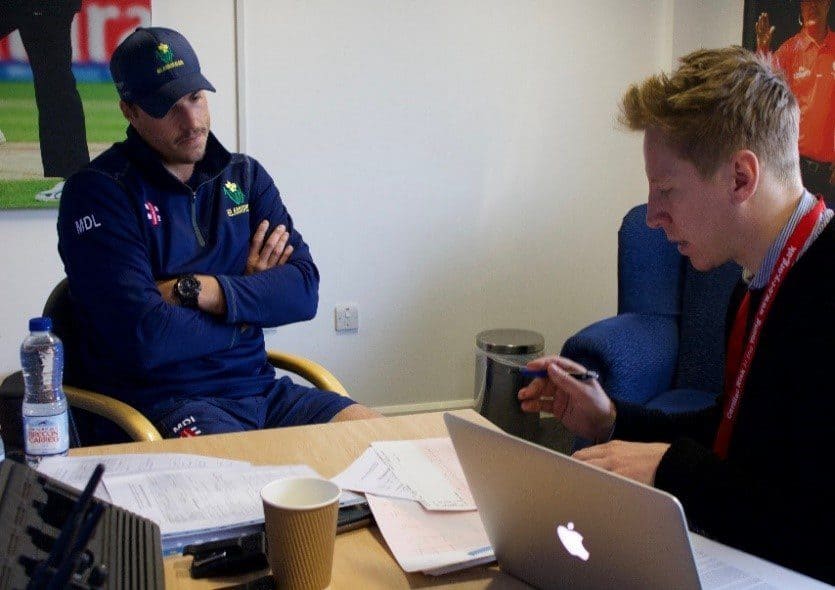
I attended a cardiac screening session performed for Glamorgan County Cricket Club players at the Sophia Gardens Wales stadium in Cardiff.

http://www.glamorgancricket.com/

The screening was carried out by CRY (Cardiac Risk in the Young) on behalf of the ECB sports science and medicine department.

https://www.ecb.co.uk/national-cricket-performance-centre/sport-science-and-medicine-team

The screening programme included an electrocardiogram, echocardiogram, medical history form and an interview with a Cardiologist.

An(ECG) records the electrical activity of the heart. The heart produces tiny electrical impulses which spread through the heart muscle to make the heart contract. These impulses can be detected by the ECG machine.

The CRY mobile screening health questionnaire is a comprehensive document that asks questions about the players such as, age, ethnicity, smoking status and current medication. The CRY team measure and record the weight, height and blood pressure of all the players.

The questionnaire also asks about any symptoms the players may have during exercise, following exercise or unrelated to exercise such as, 

There are also questions about family history, asking: 

The next section asks if the players have had any cardiac screening previously, have been seen by a cardiologist or have had a diagnosis of a cardiac condition.

The last section of the form asks the players to give information on how much exercise they do in a week, how many hours per day, how many days per week and at what level e.g. professional, international, county, club or recreational.


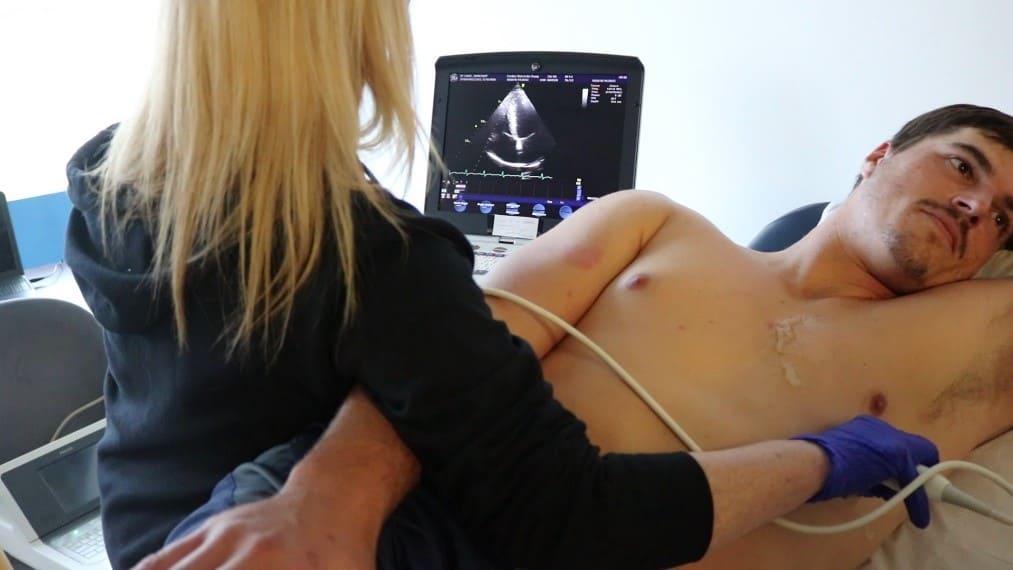
Marchant De Lange having an echocardiogram 

An echocardiogram is an ultrasound scan of the heart. It is sometimes just called an 'echo'. Ultrasound is a very high-frequency sound that you cannot hear but it can be emitted and detected by the device. The scan can give accurate pictures of the heart muscle, the heart chambers and structures within the heart including the valves.


Marchant De Lange having a consultation with Cardiologist Dr Hamish Maclachlan 


If any abnormalities are detected the player will be referred to the Cardiology unit at St George’s Hospital in London for further testing.

Further testing will also be performed if any family members suffer from heart abnormalities or if the players become symptomatic at any time.

How long does a cardiac screen take?

The cardiac screening at Sophia Gardens Wales took approximately 40 minutes for each player. The team from CRY were able to screen 22 players in total, 13 contracted players and 9 academy players. The players that weren’t screened this year will be picked up next year due to being over 25 and classed as low risk, but also have a recent, valid, ECG.

Who are CRY?

Since its formation in 1995, Cardiac Risk in the Young (CRY) has been working to reduce the frequency of young sudden cardiac death (YSCD). CRY supports young people diagnosed with potentially life-threatening cardiac conditions and offers bereavement support to families affected by YSCD.

CRY promotes and develops heart screening programmes and funds medical research, as well as publishing and distributing medical information written by leading cardiologists for the general public. CRY funds specialist referral, screening and cardiac pathology services at leading UK hospitals.

CRY is a registered charity.

Can anyone have a cardiac screening?

CRY offers subsidised ECG and Echocardiogram screening to all young people between the ages of 14 & 35.

Follow the link below for more information and screening events/locations from CRY.

https://www.c-r-y.org.uk/cardiac-screening/

Wound Management & Suturing Kit + Special Offers

Suturing kit
Contents of the Lubas medical wound management & suturing kit.

We are currently offering a discount if you purchase a 'Wound Management Kit' in conjunction with any Wound Management & Suturing course.

Kit Contents

·        3 x Suture removal kit

·        2 x Staple gun + remover

·        2 x Small/medium/large latex medical gloves

·        2 x Anchored skin closure kit

·        2 x Topical skin adhesive 0.5 g

·        3 x Standard suture pack (containing; 1 x Treves forceps 13cm, 1 x Iris stitch scissors 11.5 cm, 1 x Kilner needle holder cm, 1 x T.O.E dissecting forceps 13 cm)

·       1 x 20 ml Normal Saline solution

·       1 x Sharps box

·       1 x Clinical waste bag

·       3 x 18 mm Sutures

·       3 x 27 mm Sutures

·       A training kit to practice your suturing skills. (contains; 2 x 4-0 18mm sutures, 1 x 3-0 27 mm suture, Soft leather sponge.)

     The training kit also includes a fine suturing pack plus containing; 1 x Kilner holder 14cm, 1 Iris stitch scissors 11.5cm, 1 x Toothed forceps 10 cm, 1 x Iris Non-toothed forceps 10cm, 1 x Crepe sterile paper, 1 x Tray with 2 integral pots, 2 x Dressing towels 43cm x 38 cm, 5 x Swabs 4 ply 7.5cmx7.5cm.

Are you a medical professional looking to update your suturing skills or perhaps learn a new skill altogether? Why not attend one of our wound management course’s, follow the link to visit the website or call the office on 02921 304 101.

What is CPR?

CPR (Cardio Pulmonary Resuscitation) is an emergency life saving procedure that is carried out when somebody is in cardiac or respiratory arrest. We combine rescue breaths and chest compressions to try and circulate oxygen around a casualty’s body to the major organs in preparation for defibrillation.

What is a cardiac arrest?

Cardiac – relating to the heart. Arrest – To stop.

Cardiac arrest is when the heart stops pumping blood (and therefor oxygen) around the body. This is often caused by an electrical or mechanical malfunction of the heart, an underlying heart condition, or following a medical emergency. During cardiac arrest, the vital organs are starved of oxygen and the casualty becomes unconscious and stops breathing.

Is a heart attack the same as cardiac arrest?

No. A heart attack is caused by a blockage in the arteries supplying blood and oxygen to the heart tissue. As the heart is a muscle, it requires oxygen to function correctly. If untreated, this can develop into a cardiac arrest as outlined above. Therefore, a heart attack could be the cause of a cardiac arrest

How effective is CPR at restarting the heart?

A common misconception is that CPR is designed to “re-start” the casualty’s heart. CPR is effective in circulating blood and oxygen to the vital organs until a defibrillator becomes available to shock the casualty (and theoretically restart the heart). Effective CPR within the first few minutes of cardiac arrest can more than double the chances of survival.
What is a ‘defibrillator’?

A defibrillator (or AED, which stands for Automated External Defibrillator) is a device that can deliver an electric shock to the heart of a casualty in cardiac arrest. The shock provides enough electricity to help “re-start” the heart under the right circumstances.

AED’s assess the casualties heart rhythm and “decide” if a shock is required. This makes them very safe and simple pieces of equipment for bystanders to use.

Can I use a defibrillator?

The simple answer is yes. Though it is highly preferred and recommended you have training before using a defibrillator, it isn’t a requirement. A defibrillator is a vital piece of life saving equipment that can be used by any bystander during cardiac arrest.

Defibrillators are becoming much more common in public places like supermarkets, train stations, public gyms, airports etc. These are referred to as PAD’s (Public Access Defibrillators). They are very effective at guiding the operator through the process of potentially shocking a casualty and will not allow you to shock someone who doesn’t need it.

There is no reason to be afraid to use a defibrillator if you suspect a casualty is in cardiac arrest.

Is CPR effective without mouth to mouth or rescue breaths?

Chest compressions combined with rescue breaths is still the recommended and most effective form of CPR.

However, if you have reason not to give mouth to mouth/rescue breaths e.g. the casualty has blood or vomit around their mouth, or you don’t know the casualty and are unsure as to the risks of infection, “hands-only” CPR is an acceptable alternative.

In casualty’s that have suffered cardiac arrest through a lack of oxygen (caused by drowning, asthma, anaphylaxis or in most children), “hands only” CPR is much less effective.

Chest compression's without rescue breaths are always still more effective than doing nothing at all!

How do I know if someone is in cardiac arrest?

Without an appropriate supply of blood & oxygen, the brain cannot function and shuts down. During cardiac arrest, the lack of oxygen to the brain will cause the casualty to become unresponsive or unconscious.

The casualty may make noisy, infrequent gasps or may show no signs of breathing. This is not normal breathing and would indicate the casualty is in cardiac arrest.

If the casualty is unconscious and has stopped breathing normally, they are in cardiac arrest. Call 999 and start CPR!

Will the casualty survive a cardiac arrest?

In the UK, fewer than 10% of people that suffer cardiac arrest, with an attempt of CPR outside of hospital, survive.

Where a cardiac arrest is recognised immediately, CPR is performed, and a defibrillator is used prior to medical professionals (Paramedics) arriving, survival rates of higher than 50% have been reported. This really highlights the importance of the recognition of signs and symptoms and importance of immediate CPR and defibrillation.

Can you be sued for doing CPR?

Nobody in the UK has ever been sued for attempting CPR. In 2015, the government introduced the ‘Social Action, Responsibility and Heroism (SARAH)’ act to protect those performing “acts of heroism”.

The link to this law is as follows:

http://www.legislation.gov.uk/ukpga/2015/3/introduction/enacted

Is adult CPR different from child CPR?

The ratio of compressions to rescue breaths in children is the same as the adult sequence, however, there are some modifications that make it more appropriate for children as follows:

It is important to know that these modifications are not essential, and it is far more important that some form of CPR is given rather than nothing at all. There is a general fear that the “wrong” form of CPR given in children could make the situation worse. This is not the case and any attempts at CPR will have more benefit that doing nothing.

How effective is CPR at restarting the heart?

A common misconception is that CPR is designed to “re-start” the casualty’s heart. CPR is effective in circulating blood and oxygen to the vital organs until a defibrillator becomes available to shock the casualty (and theoretically restart the heart). Effective CPR within the first few minutes of cardiac arrest can more than double the chances of survival.